
 995
995


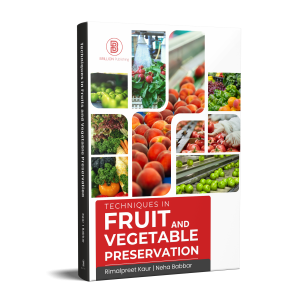
The book “Techniques in Fruits and Vegetable Preservation” is a comprehensive and insightful resource that explores the science, methods, and technologies involved in the preservation and value addition of
fruits and vegetables. It covers a wide array of processing techniques including traditional methods like
drying, canning, freezing, fermentation, and pickling, as well as modern and emerging non-thermal
technologies such as high-pressure processing, pulsed electric elds, and minimal processing. Each method is
explained with scientic clarity, focusing on how factors like temperature, moisture content, enzymatic
activity, and microbial load affect the quality, safety, and shelf life of processed products. The book begins
with the selection and preparation of raw materials, emphasizing the importance of maturity indices,
sorting, grading, washing, peeling, and blanching. It then delves into core processing operations, detailing
their principles, equipment used, and quality control parameters. Packaging plays a critical role in the
preservation process, and the book highlights advancements in packaging materials and techniques like
vacuum and modied atmosphere packaging. Special attention is given to nutritional retention, sensory
attributes, and food safety standards, including hygiene practices and regulatory compliance. The book
also includes chapters on waste management and by-product utilization, promoting sustainability in
processing industries. Richly supported by diagrams, process owcharts, and real-world examples, it
provides practical insights alongside theoretical knowledge. This book is an essential reference for students,
researchers, academicians, and professionals in food science, postharvest technology, and horticulture. It
equips readers with the knowledge and skills required to develop safe, high-quality, and marketable fruit
and vegetable-based products while ensuring minimal losses and environmental impact. With its balanced
focus on both fundamental concepts and practical applications, “Techniques in Fruits and Vegetable
Processing” stands out as a valuable tool in the advancement of agro-processing industries.
Features
The book “Techniques in Fruits and Vegetable Preservation” is a well-structured guide that presents detailed knowledge of both conventional and modern methods used in the processing and preservation of fruits and vegetables. It bridges the gap between theoretical concepts and practical applications, helping readers understand how to retain nutritional quality, enhance shelf life, and add value to fresh produce. Designed for students, researchers, and industry professionals, the book offers a scientic yet accessible approach to the evolving field of food processing.
· This book includes a wide range of techniques such as canning, drying, freezing, fermentation, highpressure
processing, and pulsed electric elds—explained with clear scientic principles and step-bystep procedures.
· Emphasizes factors affecting product quality, nutritional retention, food safety standards, and the
importance of sustainable practices like waste utilization and eco-friendly processing.
· Enriched with owcharts, diagrams, tables, and real-world case examples that aid understanding and
application of theoretical knowledge in actual processing environments.
• Introduction to Fruits and Vegetable Preservation
• Biological Composition of Fruits and Vegetables
• Principles of Food Preservation
• Pre-Treatment Processes in Preservation
• Canning and Bottling of Fruits and Vegetables
• Freezing as Preservation
• Drying and Dehydration
• Unfermented and Fermented Fruits and Vegetables
• Preservation of Fruits and Vegetables
• Edible Coating on the Fresh Produce
• High Pressure Processing
• Irradiation and Its Role in Food Preservation
• Novel Preservation Technologies
• Sensory Evaluation in Preserved Foods
• Microbial Safety and Quality Assurance
• Impact of Preservation on Nutritional Content
• Future Directions in Fruits and Vegetables Preservation