
 3495
3495


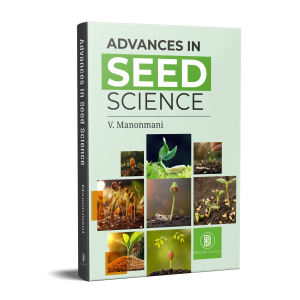
Advances in Seed Science provide a comprehensive overview of modern research and emerging technologies in seed biology, production, and utilization. It highlights innovations in seed physiology, biotechnology, and sustainable practices, making it a valuable resource for students, researchers, and professionals seeking to strengthen their understanding of seed science and its agricultural applications.
Key Features of the Book
- Cutting-Edge Insights – Covers recent advancements in seed physiology, molecular biology, and biotechnological interventions that shape the future of seed science.
- Practical Applications – Discusses techniques in seed testing, storage, enhancement, and conservation, bridging theory with field-level practices.
- Sustainability Focus – Emphasizes climate-resilient seed systems, biodiversity conservation, and eco-friendly strategies for long-term agricultural sustainability.
• Physiological and Molecular Aspects of Seed Development
• Gene Expression during Seed Development
• Theories and Concepts of Selective Cell Elimination in Seeds
• Physiological and Molecular Regulation of Germination and Dormancy
• Mechanism of Desiccation and Stress Tolerance during Seed Development
• Gene Expression and Structural Changes in Membranes of Developing Seeds
during Desiccation
• Prediction of Seed Dormancy and Longevity using Mathematical Models
• Effect of Climate Change on Pollination, Seed Formation, Development and
Seed Quality
• Recent Techniques in Seed Production of Self-incompatible and Apomictic Plant
Species
• Somatic Embryogenesis, Principles and Methods of Production of Synthetic
Seeds and Merits and Demerits
• Gene Use Restriction Technology (GURT) – Terminator and Verminator
Technology
• Clustered Regularly Interspaced Short Palindromic Repeats (CRISPR) Cas and
Gene Editing Techniques
• OMICS in Relation to Seed Science and Technology
• Principles and Application of Proteomics in Seed development and Germination
• Principles and Application of Proteomics in Seed Dormancy and Longevity
• Principles and Application of Seed Proteomics in Varietal Identification
• Genetic Analysis and QTL Mapping of Traits Related to Seed Germination
• Genetic Analysis and QTL Mapping of Traits Related to Seed Dormancy
• Genetic Analysis and QTL Mapping of Traits Related to Seed Vigour and Longevity
• DNA Fingerprinting – RFLP, AFLP and RAPD Techniques for Identification of Varieties and
Hybrids
• SSR, SNP and Microarray Techniques for Identification of Varieties and Hybrids
• Techniques for Detection of GM Seeds
• Varietal Identification through Image Analysis and Machine Vision Techniques
• Spectral Imaging for Varietal Identification and Quality Assessment
• Use of Artificial Intelligence in Seed Production and Quality Control
• New Approaches in Seed Enhancement Techniques – Seed Coating and Pelleting
• Physiological, Molecular and Sub-cellular Basis of Seed Priming
• Application of Nano Technology in Seed Quality Enhancement
• Detection and Identification of Seed Borne Diseases and Insect Pests through ELISA
• Detection and Identification of Seed Borne Diseases and Insect Pests through PCR
Techniques
• International Movement of Seeds, OECD Seed Certification Schemes
• Recent Developments in Seed Laws and Policies
• Ethical Issues and IPR System Related to Seed Trade and Movement